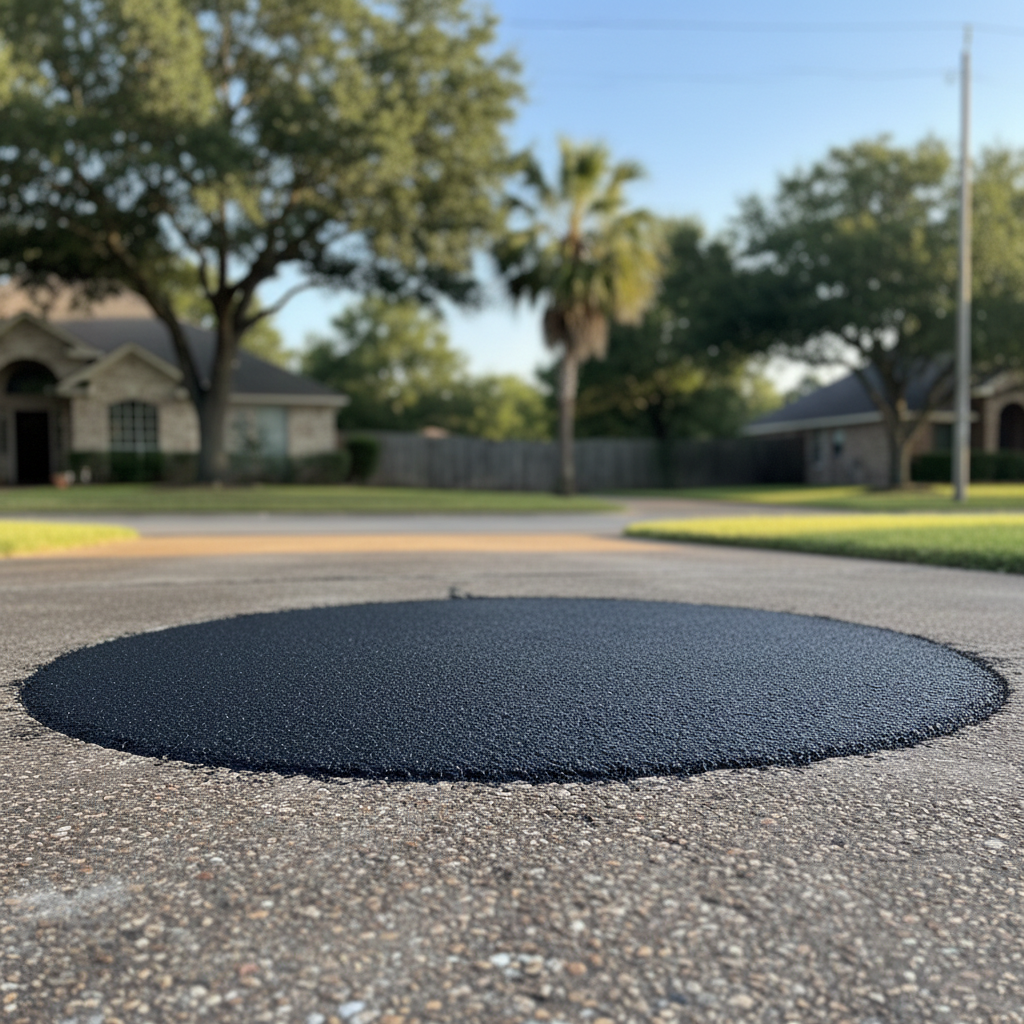
Got cracks or potholes in your asphalt driveway? You're probably wondering what's the best way to fix it, how long it'll last, and what it's gonna cost. I get these questions all the time from folks right here in Victoria, whether they're out near the mall or in older neighborhoods like Riverside. So, I figured I'd lay out the answers to the most common questions I hear about asphalt patching.
What's the difference between a patch and a full replacement?
This is a big one. A full replacement means we're tearing out your entire driveway or parking lot and laying down all new asphalt. It's a big job, and it's usually what you do when the whole surface is just shot – I'm talking widespread cracking, major heaving, or the base underneath is completely gone. A patch, on the other hand, is exactly what it sounds like: we're fixing a specific, localized area. Think potholes, alligator cracking in one spot, or areas where the asphalt has just crumbled away. We cut out the bad section, prepare the base, and lay down new asphalt. It's quicker, less disruptive, and way cheaper than a full replacement. We're essentially extending the life of your existing pavement by addressing its weak spots.
How long does an asphalt patch typically last?
That really depends on a few things. First, how well did the crew do the patch? Did they properly cut out the old asphalt, prepare the base, and compact the new material? If it's done right, a good patch can last anywhere from 3 to 7 years, sometimes even longer. But it also depends on what caused the damage in the first place. If you've got a drainage issue that keeps washing out the same spot, or a heavy truck is constantly driving over a weak area, that patch isn't going to hold up as long. Here in Victoria, our clay soils can shift a lot with the rain, which puts extra stress on any pavement, patched or not. Regular maintenance, like sealcoating, can also help protect your patches and the rest of your driveway, making everything last longer.
Can I just fill a pothole myself with a bag of cold patch?
You can, but I wouldn't recommend it for anything you want to last. Cold patch is a temporary fix, plain and simple. It's great if you need to fill a pothole immediately to prevent further damage or a tripping hazard, especially in a pinch. But it doesn't bond permanently with the existing asphalt, and it's not designed to withstand heavy traffic or our Victoria heat and humidity for long periods. You'll often see it break up and come out within a few months, sometimes even weeks. For a durable repair, you need hot mix asphalt, which requires specialized equipment to heat and compact properly. If you're looking for a lasting repair, leave the cold patch for emergencies and call in the pros.
When is it too late for patching, and I need a full replacement?
There's definitely a point of no return. If more than 25-30% of your asphalt surface has severe cracking, potholes, or structural failure, patching becomes less cost-effective. You'd be patching so many areas that the cost starts to approach what a full replacement would be, and you'd still have an older, weaker base underneath. Another sign is when the sub-base, the layer of rock and soil underneath the asphalt, is failing in multiple spots, causing widespread heaving or depressions. If water is constantly pooling in several places, or you're seeing extensive 'alligator' cracking across large sections, it's probably time to start thinking about a full tear-out and replacement. We can come out and give you an honest assessment of what's best for your specific situation.
What's involved in a professional asphalt patching job?
When we do it right, it's more than just dumping asphalt in a hole. First, we mark out the damaged area, usually cutting it into a neat, rectangular shape. This clean edge helps the new asphalt bond better. Then, we remove all the old, damaged asphalt and debris. We inspect the sub-base underneath; if it's soft or unstable, we'll fix that too, adding new aggregate and compacting it thoroughly. Next, we apply a tack coat – that's a sticky asphalt emulsion that helps the new patch adhere to the old pavement. Finally, we lay down hot mix asphalt, spread it evenly, and compact it with a roller until it's flush with the surrounding pavement. The goal is a seamless, durable repair that blends in and lasts.
How long do I need to stay off a newly patched area?
This is important. With hot mix asphalt, you generally want to give it at least 24-48 hours before driving or parking on it. The asphalt needs time to cool down and cure properly. If you drive on it too soon, especially in our hot Victoria summers, you can cause ruts, tire marks, or even displace the fresh asphalt. For pedestrian traffic, you can usually walk on it within a few hours once it's cool to the touch. If we've done a particularly deep patch or it's a very hot day, we might recommend a little extra time. We'll always give you specific instructions once the job is done to make sure your new patch sets up perfectly.
Look, maintaining your asphalt is an investment. Doing it right the first time, even for a patch, saves you money and headaches down the road. If you've got questions about your driveway or parking lot, don't hesitate to give us a call at Pacific Asphalt Solutions. We're here to help folks in Victoria keep their pavement in top shape.